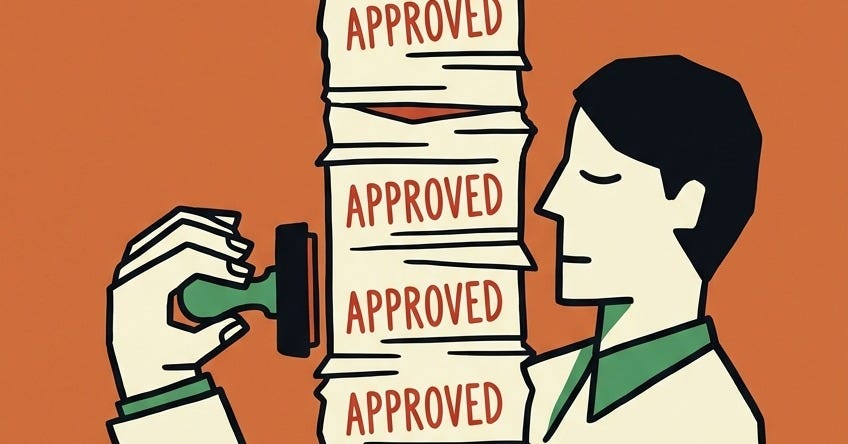
TLDR: Answers now come faster than ever, so this is a good time to ask what actually matters. Here are ten questions I am still struggling with, on delegation, saved time, consent, dependence, and whether we can still sit with our own thoughts. Later posts will look for evidence-backed answers.
Table of Contents
Yesterday was a hot, sunny day, and while listening to the tunes of honking cars, I wrestled with some thoughts. Today, I continued that contest, so here are a few questions that should (or could) trouble you too. You’re welcome.
Quick definition of terms
-
Cognitive offloading is using an outside tool to reduce mental effort, from writing a shopping list to asking a chatbot to draft a reply. A 2025 study of 666 people linked frequent AI use with lower critical thinking scores, with offloading as the likely route.
-
Agents and subagents are AI systems that plan and carry out multi-step tasks on their own, sometimes handing parts of the work to other agents.
-
MCP (Model Context Protocol) is an open standard that lets AI models connect to outside tools, files and data sources.
-
Muse is Meta’s family of AI models from Meta Superintelligence Labs, starting with Muse Spark in April 2026.
Delegation, and what it costs
-
Where does this “delegation culture” end, and how much can our human frame really endure?
For some, it’s like being on steroids, or a toxic manager giving an intern so many tasks without fear of breaking the labour laws. How healthy is that though?
-
Can we really explain to our kids how they have to learn to do fractions in math class, but we (the model parents) are unable to independently construct a sentence?
Saved time, and more work
-
If AI helps us save time, what exactly are we doing with the time that was saved?
We optimize, we streamline, but could the greatest loss in our human capacity be that we are unable to use our minds fruitfully some other way?
If there was a book about general productivity in the 2020s, perhaps the right title should be: Smart Machines, Lazy People.
-
Is more = better?
Thanks to agents, and subagents, and MCPs, we can get more work done, but to make the best of that, we need extra effort to assess, govern and ensure alignment. Is it more for less, or more for more?
Consent, trust and dependence
-
Is our consent really meant to be a function of time?
At first, ChatGPT had skeptics regarding privacy (I was one of them), but over the years, people learnt it’s not so bad to just dump their photos, faces, and files without overthinking. My bet is that Muse will be the same, but should that ultimately be the case, every time? I made a related case in Consent Without Comprehension.
-
If all chatbots are completely removed from our lives, would we feel less whole? Should we?
Well, in Big ’26, we have folks that treat AI more like an idol than an intern. Some trust these tools more than their spouses, family or close confidants. How did we get to this point?
-
Which of these is a far more important concern?
-
AI
-
how dependent we are on AI
-
how soulless human interactions are becoming
Sitting with a thought
-
Is the inability to sit with a thought really a responsibility we should keep outsourcing?
Does your brain not deserve to “work” every now and then? Is it not human to struggle with raw thoughts for a moment, without seeking the opinion of a machine playing “pick me”?
Slowing down, and what comes next
-
Can we honestly call for the total slowing down of AI when there is proof of its effectiveness across healthcare, research, and product development?
-
After AI, what next?
The world keeps measuring results without addressing the costs in terms of privacy, relationships, quality of independent thought, and attention. In subsequent posts, we’d dive deep into some of these problems, in a bid to find evidence-backed answers.
This piece is part of my efforts to understand how policies shape technology, especially AI. Or how AI shapes policy? Well, both. Subscribe to get every new publication in your inbox.
Sources & Good Reads
Gerlich, M. (2025). AI Tools in Society: Impacts on Cognitive Offloading and the Future of Critical Thinking. Societies, 15(1), 6. A survey of 666 people found frequent AI use went with lower critical thinking scores, mediated by cognitive offloading. The design is correlational, so it does not prove cause.
Kosmyna, N. et al. (2025). Your Brain on ChatGPT: Accumulation of Cognitive Debt when Using an AI Assistant for Essay Writing Task. MIT Media Lab preprint, relevant to questions 2 and 8.
Model Context Protocol (specification and SDKs on GitHub), the open standard behind the MCPs in question 4.
Muse Spark launches as Meta’s first Superintelligence Labs model, background for question 5.
U.S. Food and Drug Administration, Artificial Intelligence-Enabled Medical Devices, the public list of AI devices authorised for clinical use, one side of question 9.
Future of Life Institute (2023), Pause Giant AI Experiments: An Open Letter, the best-known call to slow down, the other side of question 9.
From this site: Formal Control, Real Dependence on epistemic dependence, Apollo’s Human Computers on cognitive offloading, and AI as Infrastructure on reliance and harm.