TLDR: The Habsburgs held power through intermarriage until inbreeding depression weakened the line. Models trained on AI-generated data face a similar decline, known as model collapse: they keep giving fluent answers while losing rare facts, minority perspectives and edge cases.
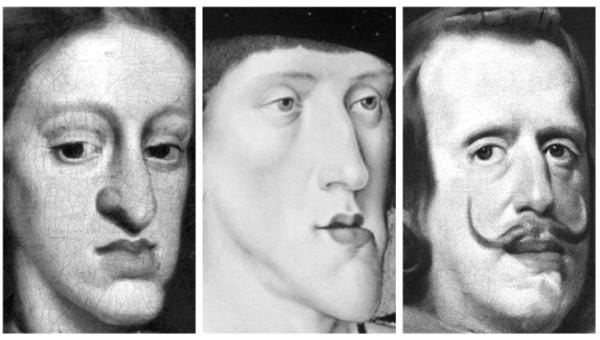
The Habsburgs, DNA Geek
Table of Contents
The Habsburgs and inbreeding depression
From 15th to the 20th century (yeah, ages before SpaceX’s public offer), House of Habsburg was one of most prominent royal houses across Europe. They devised a way to stay in power, intermarriage. Uncles regularly married nieces and first cousins wed. It worked, well, until it didn’t.
In biology its called inbreeding depression. When reproduction occurs repeatedly among closely related individuals, genetic variation shrinks. The population continues to grow, sometimes for generations, but quietly accumulating defects: reduced fitness, physical malformations, weakened adaptability to new environments.
Professor Roman Vilas from the University of Santiago de Compostela put it that across nearly two centuries of power play, the Habsburgs produced a lineage so visibly degraded by the very strategy designed to protect it.

Albeit insensitive, people called them freaks of nature, thanks to a family’s desire to keep power concentrated within the bloodline. The last of the line, Charles II of Spain, suffered many severe physical & cognitive impairments.
Your brain produces the original human thought which is the scarcest input
Quick definition of terms
-
Inbreeding depression is the loss of fitness that builds up when reproduction occurs repeatedly among closely related individuals.
-
Synthetic data is content generated by AI models rather than produced by people.
-
Model collapse is when models trained on data generated by earlier models gradually lose the tails of the distribution: rare facts, minority perspectives and edge cases.
From human data to synthetic data
When models were trained on early internet corpora(this is just a technical term for datasets), they were exposed to millions of independent minds through academic papers, news archives, fiction, technical documentation, forum debates, government records, personal essays. The training distribution was wide, heterogeneous, sometimes with imperfections, but ALWAYS grounded in human-produced thought across centuries.
Well, that era is closing, because the world is now saturated with AI-generated content. Some garbage here, some slop there. Your classmate’s AI blog posts, your colleague’s marketing copy, product descriptions, LinkedIn articles, code snippets, news summaries, and increasingly, synthetic datasets used in research. See the issue?
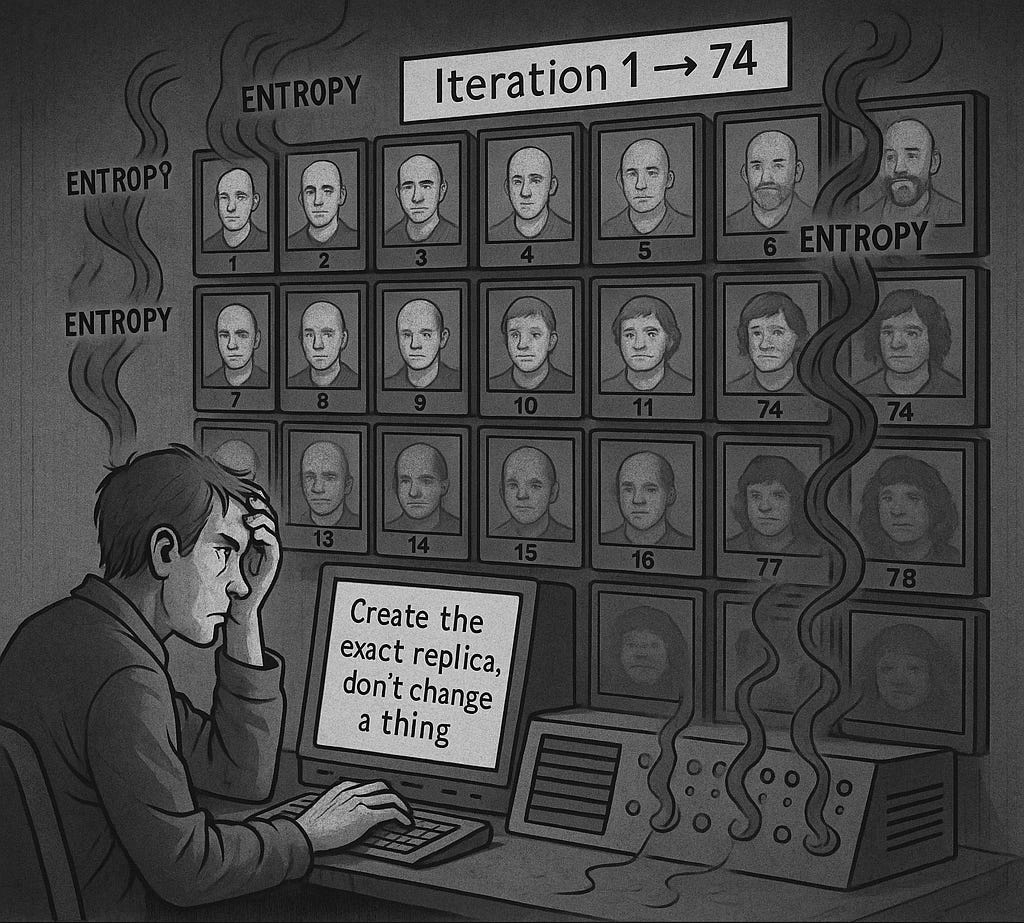
Model collapse
A 2024 paper from Oxford & other institutions demonstrated that the tails of distribution erode when models train on data generated by prior model generations. It was here that this phenomenon called Model Collapse was properly defined. This concept is also known as “Autophagous Loop”.
Picture yourself in 2035, & the web is filled with synthetic content, outputs of AI models, as the dominant forms of production. A new model, GPT1000 has just been trained, on that data. Guess what happens? The exact move that collapsed an entire European Dynasty.
Not much of a shocker now, is it?
Maybe this is our reminder that a system can fluently, confidently generate correct, narrow answers while gradually forgetting rare facts, minority perspectives, unusual reasoning paths, and edge cases that originally made it useful.